Category: Daily

ASX Most Shorted Stocks Performance

Date: Sunday, November 30, 2025, 7:30:41 PM | This table shows the performance of ASX’s most shorted stocks over multiple time frames.

Short % Update Code Previous Close Today Last 30 days Last 90 days Last 180 days Last 360 days Last 2 years
21.7 6/18/2025 ASX:BOE $1.565 3.5% -15.2% -19.0% -58% -39% -59%
14.4 5/5/2024 ASX:DMP $21.170 1.0% 19.2% 46.1% -4% -35% -60%
12.8 10/4/2025 ASX:PDN $7.850 3.4% -14.3% 0.5% 36% 5% -15%
12.3 10/4/2025 ASX:GYG $23.390 1.0% -11.7% -7.4% -22% -47%
11.6 10/6/2025 ASX:IEL $5.280 -0.4% -6.9% -11.0% -30% -59% -77%
10.9 2/18/2025 ASX:PLS $3.950 2.5% 22.7% 66.7% 255% 69% 13%
10.6 7/27/2025 ASX:PWH $8.150 1.0% -3.5% 5.5% 23% 1% -15%
10.4 11/11/2025 ASX:TLX $15.300 -0.5% -5.9% 2.1% -42% -39% 59%
9.9 11/19/2024 ASX:FLT $12.700 6.5% 9.9% 5.9% 3% -20% -28%
9.8 10/25/2025 ASX:PNV $1.200 2.5% -10.9% -2% -45% -17%
9.3 7/23/2025 ASX:CUV $11.510 3.4% 6.2% 11.0% 16% -8% -31%
9.1 10/11/2025 ASX:IPH $3.480 1.1% -3.3% -21.1% -28% -29% -46%
9.1 1/1/2025 ASX:ILU $6.540 -1.4% -3.0% 2.1% 79% 14% -5%
9.1 12/10/2024 ASX:CTD $16.070 0.0% 18% 15% -13%
8.9 9/20/2025 ASX:NAN $4.220 1.4% -6.1% 0.5% -4% 32% -3%
8.5 10/4/2025 ASX:DGT $2.670 4.9% 6.9% -11.1% -19%
8.0 4/13/2024 ASX:VUL $6.010 0.0% -4.0% 49.1% 59% -5% 172%
7.2 9/17/2025 ASX:BRG $30.980 -0.1% 1.7% -5.9% 7% -11% 24%
6.8 10/11/2025 ASX:MSB $2.690 0.7% 8.0% 34.2% 69% 54% 904%
6.7 6/23/2025 ASX:TWE $5.740 1.4% -4.0% -26.2% -28% -49% -44%
6.6 6/13/2025 ASX:KAR $1.540 0.0% -2.5% -11.0% -6% 13% -20%
6.6 5/24/2025 ASX:DYL $1.585 3.5% -8.4% -12.3% 26% 33% 64%
6.5 8/29/2025 ASX:LIC $5.720 -0.3% 9.6% 4.0% -19% -38% -68%
6.3 10/6/2025 ASX:IPX $5.090 0.4% -24.7% -27.0% 48% 12% 299%
6.1 10/31/2025 ASX:DRO $2.000 -1.0% -51.4% -38.9% 55% 183% 539%
Average 1.38% -3.8% 1.6% 17% 0% 68%
Median 0.98% -3.7% 0.5% 3% -7% -15%
Sum VAS ASX 200 ETF -0.07% -2.7% -3.4% 3% 2% 20%
239.0 MVS Small Cap ETF 1.43% 1.4% 4.2% 16% 16% 27%

Rule Of 40 Stocks

Date: 30-11-2025 20:06:28 | This table shows stocks filtered by the Rule of 40 criteria, a metric which aims to balance growth and profitability to assess business health. | Utilities, Property and Resource companies have been omitted. | Learn more about the Rule of 40 HERE.

1-Week Statistics

  • Average 1w return: 0.52%
  • Median 1w return: -0.83%
  • Winners: 38
  • Losers: 42

6-Month Statistics

  • Average 6m return: 35.06%
  • Median 6m return: 20.70%
  • Winners: 64
  • Losers: 16

12-Month Statistics

  • Average 12m return: 32.64%
  • Median 12m return: 16.87%
  • Winners: 59
  • Losers: 20

# Rule of 40 Name Ticker 1 Month 6 Months 12 Months
1 247.2% DroneShield Limited DRO -36.74% 125.00% 50.00%
2 231.9% Pinnacle Investment Management Group Limited PNI -4.20% 18.11% 1.44%
3 223.6% Omni Bridgeway Limited OBL -10.00% 12.50% 44.50%
4 172.0% NVIDIA Corporation NVDA 3.74% 87.68% 44.08%
5 113.5% WHSP Holdings Limited SOL -10.84% 9.94% 7.23%
6 110.1% Generation Development Group Limited GDG 9.82% 51.38% 128.37%
7 106.3% Pro Medicus Limited PME -10.06% 40.45% 48.89%
8 100.9% Helia Group Limited HLI -1.40% 39.16% 39.85%
9 96.5% SKS Technologies Group Limited SKS 41.64% 164.33% 196.43%
10 87.1% Micron Technology, Inc. MU 99.19% 265.39% 132.25%
11 83.8% GQG Partners Inc. GQG 4.52% -2.12% -28.29%
12 80.2% Auckland International Airport Limited AIA 2.64% -3.97% 4.63%
13 75.9% Netwealth Group Limited NWL -6.39% 27.14% 15.10%
14 73.2% Challenger Limited CGF 6.86% 60.29% 33.94%
15 71.5% Tuas Limited TUA -14.51% 27.56% 20.67%
16 71.4% Chorus Limited CNU -9.03% 8.77% 0.50%
17 70.1% REA Group Limited REA -17.98% -12.37% -8.13%
18 68.5% Sigma Healthcare Limited SIG -4.95% -0.35% 41.18%
19 67.5% ASX Limited ASX -5.06% -8.30% -8.83%
20 66.8% Smart Parking Limited SPZ 45.83% 97.18% 129.51%
21 66.8% Telix Pharmaceuticals Limited TLX 10.53% -35.59% -25.68%
22 65.6% Clinuvel Pharmaceuticals Limited CUV 12.58% 12.90% -15.54%
23 63.9% AUB Group Limited AUB 4.87% 24.58% 21.41%
24 61.5% Palantir Technologies Inc. PLTR 8.75% 127.60% 329.28%
25 60.4% HUB24 Limited HUB 0.88% 75.97% 73.18%
26 60.2% Reef Casino Trust RCT -6.65% -0.85% 24.47%
27 60.0% Commonwealth Bank of Australia CBA -9.22% -0.97% 14.89%
28 59.6% Vysarn Limited VYS 14.55% 53.66% 31.25%
29 59.5% Technology One Limited TNE -20.01% 18.74% 24.12%
30 59.3% CAR Group Limited CAR -11.07% 12.38% -6.38%
31 58.5% WiseTech Global Limited WTC -23.02% -2.42% -44.06%
32 55.4% Nu Holdings Ltd. NU 16.71% 81.15% 32.75%
33 55.2% oOh!media Limited OML -22.26% -10.84% 0.39%
34 55.0% Upstart Holdings, Inc. UPST -30.25% 29.20% 15.46%
35 54.8% Praemium Limited PPS 9.49% 29.10% 51.75%
36 54.4% Judo Capital Holdings Limited JDO -4.19% -3.03% -2.44%
37 54.3% Acrow Limited ACF 4.37% 4.37% 2.38%
38 54.1% Atlas Arteria Limited ALX -4.23% 1.63% 3.97%
39 54.0% ANZ Group Holdings Limited ANZ 4.34% 22.92% 16.87%
40 54.0% Integral Diagnostics Limited IDX -7.37% 15.79% -13.44%
41 53.6% Alphabet Inc. GOOGL 38.81% 119.90% 93.04%
42 53.3% Tasmea Limited TEA 8.13% 97.12% 109.17%
43 52.9% Microsoft Corporation MSFT -2.64% 36.73% 18.12%
44 52.9% Xero Limited XRO -22.13% -16.00% -15.88%
45 52.4% Southern Cross Electrical Engineering Limited SXE 25.79% 44.85% 38.15%
46 51.7% Transurban Group TCL 3.68% 9.06% 13.97%
47 51.2% Reckon Limited RKN -0.85% 21.87% 14.71%
48 50.1% Cogstate Limited CGS 44.13% 85.61% 183.52%
49 50.0% Light & Wonder, Inc. LNW 16.68% 15.04% 8.75%
50 49.1% Codan Limited CDA 3.38% 110.72% 97.76%
51 48.0% Westpac Banking Corporation WBC -0.82% 21.30% 24.72%
52 47.7% Alliance Aviation Services Limited AQZ -41.10% -44.84% -51.57%
53 47.5% Kina Securities Limited KSL -5.73% 10.27% 22.28%
54 47.0% Kelly Partners Group Holdings Limited KPG -19.16% -14.80% 12.42%
55 46.7% Credit Corp Group Limited CCP -15.50% 13.65% -11.58%
56 46.1% Cobram Estate Olives Limited CBO -5.49% 67.57% 76.14%
57 46.0% Chrysos Corporation Limited C79 21.99% 110.39% 46.21%
58 45.7% MA Financial Group Limited MAF 6.98% 55.31% 74.05%
59 45.5% IPH Limited IPH -19.82% -20.90% -38.14%
60 45.2% Megaport Limited MP1 1.85% 55.94% 94.29%
61 45.0% Smartgroup Corporation Ltd SIQ -3.19% 20.25% 6.67%
62 44.9% Aurizon Holdings Limited AZJ 11.87% 15.86% 1.99%
63 44.5% GenusPlus Group Ltd GNP 27.84% 146.04% 162.90%
64 44.4% Magellan Financial Group Limited MFG -7.85% 34.51% -1.14%
65 44.3% Lovisa Holdings Limited LOV -21.19% 40.61% -7.35%
66 43.9% Universal Store Holdings Limited UNI 3.97% 20.00% 13.68%
67 43.5% ResMed Inc. RMD -5.21% 16.10% 13.42%
68 43.3% SEEK Limited SEK -8.49% 20.12% -1.84%
69 43.0% Infomedia Ltd IFM 0.30% 35.60% 14.53%
70 42.9% MyState Limited MYS 3.49% 19.30% 22.59%
71 42.8% Objective Corporation Limited OCL -12.88% 21.15% 18.19%
72 42.8% Australian Ethical Investment Limited AEF -19.80% 2.15% 32.18%
73 42.6% Guzman y Gomez (Holdings) Ltd GYG 0.04% -23.81% -37.97%
74 42.3% Cuscal Limited CCL 6.68% 66.95%
75 41.9% NEXTDC Limited NXT -15.56% 27.42% -23.59%
76 41.8% Bendigo and Adelaide Bank Limited BEN -18.79% 0.79% -10.33%
77 41.8% Dalrymple Bay Infrastructure Limited DBI 3.92% 17.75% 37.08%
78 41.7% ALS Limited ALQ 20.70% 47.30% 53.58%
79 41.5% Superloop Limited SLC 0.00% 31.92% 64.33%
80 41.0% ReadyTech Holdings Limited RDY 5.75% 1.70% -18.15%

NASDAQ Seasonality

Date: 01-12-2025 08:31:04 | This table shows the monthly seasonality data for the US NASDAQ index.

NASDAQ Jan Feb Mar Apr May Jun Jul Aug Sep Oct Nov Dec Total
2025 1.6% -4.0% -8.2% 0.9% 10.3% 5.9% 3.7% 0.7% 6.5% 3.1% 20.5%
2024 2.7% 6.1% 1.9% -4.5% 6.9% 6.8% -1.6% -2.6% 6.1% -0.5% 7.2% -0.5% 28.1%
2023 11.5% -1.1% 6.7% -0.1% 5.9% 6.6% 4.0% -2.2% -5.2% -3.4% 10.7% 3.8% 37.3%
2022 -9.0% -3.4% 3.4% -11.8% -3.6% -8.7% 12.2% -4.5% -10.5% 3.9% 4.4% -9.4% -37.2%
2021 4.0% 1.4% -2.5% 5.4% -1.6% 5.6% 1.2% 3.9% -5.3% 7.9% -0.4% 0.7% 20.3%
2020 2.0% -2.2% -14.0% 15.4% 7.5% 5.3% 6.8% 9.6% -5.2% -1.9% 11.3% 5.7% 40.4%
2019 9.7% 3.4% 3.9% 3.4% -7.9% 8.6% 1.0% -3.7% 1.6% 3.7% 3.3% 4.7% 31.8%
2018 -0.4% -0.4% -4.4% 4.6% 5.3% 1.7% 1.4% 5.7% -0.9% -9.1% 0.3% -9.5% -5.7%
2017 3.4% 3.8% 1.5% 3.0% 1.8% -0.9% 3.4% 1.3% 1.4% 3.2% 2.2% 0.4% 24.3%
2016 -7.7% -1.4% 6.8% -1.1% 2.7% -2.1% 7.1% 0.6% 1.9% -2.3% 2.6% 2.0% 9.1%
2015 -1.3% 7.1% -2.1% 0.8% 2.9% -1.9% 2.8% -6.9% -3.3% 11.0% -0.4% -2.0% 6.8%
2014 -1.7% 5.0% -2.5% -2.0% 3.0% 4.0% -0.9% 4.8% -1.9% 3.1% 2.1% 0.2% 13.1%
2013 4.1% 0.6% 2.5% 2.8% 3.8% -0.6% 5.6% -0.2% 4.2% 3.9% 3.2% 3.2% 33.1%
2012 7.7% 6.1% 4.5% -2.4% -7.2% 4.4% -0.4% 4.3% 1.5% -4.4% 1.1% 0.3% 15.6%
2011 1.8% 3.0% 0.0% 3.0% -1.0% -2.2% -1.0% -6.0% -6.4% 11.1% -2.4% -0.3% -0.3%
2010 -4.3% 4.7% 5.5% 2.6% -8.3% -6.5% 8.8% -7.9% 12.0% 5.8% -0.3% 6.2% 18.3%
2009 -5.2% -11.5% 15.6% 12.3% 6.5% 0.3% 7.8% 1.5% 5.6% -3.4% 4.7% 5.8% 40.0%
2008 -9.9% -2.4% -2.3% 5.9% 3.3% -8.0% 1.4% 1.8% -12.0% -17.4% -18.8% 12.8% -45.6%
2007 2.0% -1.9% 0.3% 4.2% 3.1% 1.1% -3.3% 2.0% 5.6% 4.3% -6.9% -0.3% 10.1%
2006 4.0% -1.1% 2.6% -1.5% -5.5% -0.3% -3.7% 4.4% 2.5% 5.8% 2.7% -0.7% 9.2%
2005 -5.2% -0.5% -2.6% -3.5% 7.2% -0.5% 6.7% -2.0% 0.0% -1.5% 5.3% -0.7% 2.8%
2004 3.0% -0.3% -3.1% -3.7% 3.5% 3.1% -7.6% -2.9% 3.2% 4.4% 5.9% 3.7% 9.2%
2003 -1.1% 1.3% 0.3% 9.2% 8.6% 2.0% 6.9% 4.3% -1.3% 8.1% 3.0% 0.7% 42.0%
2002 -0.8% -10.5% 7.6% -9.4% -4.3% -13.1% -5.4% 0.6% -12.3% 13.5% 11.7% -10.1% -32.5%
2001 12.2% -22.4% -17.1% 18.7% -0.3% 1.8% -5.7% -10.9% -18.0% 14.2% 14.2% 1.0% -12.2%
2000 16.2% -0.1% -13.4% -14.1% 16.6% -5.0% 11.7% -15.2% -5.6% -22.9% -4.9% -36.7%
Average 0.9% 0.0% 0.5% 1.5% 0.7% 0.9% 1.7% 0.3% -2.1% 2.2% 1.8% 0.5% 8.9%
Positive 13 12 14 14 15 14 15 14 11 15 18 15 18
Negative 11 13 11 11 10 11 10 11 14 10 7 10 7
Since 2009
Average 1.1% 1.3% 1.7% 2.0% 1.0% 1.3% 3.6% -0.1% -0.3% 1.8% 3.1% 0.7% 17.2%
Positive 9 10 9 9 9 8 11 7 7 9 11 10 12
Negative 6 5 6 6 6 7 4 8 8 6 4 5 3

NASDAQ 12 Month Price Chart

NASDAQ 12 Month Price Chart

US 10 Year Bond Yield

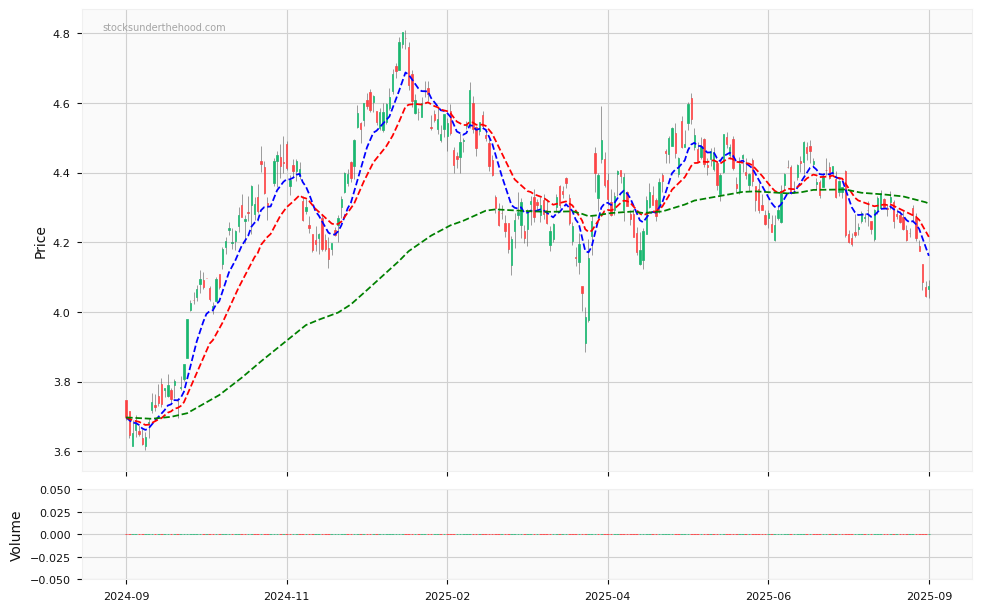
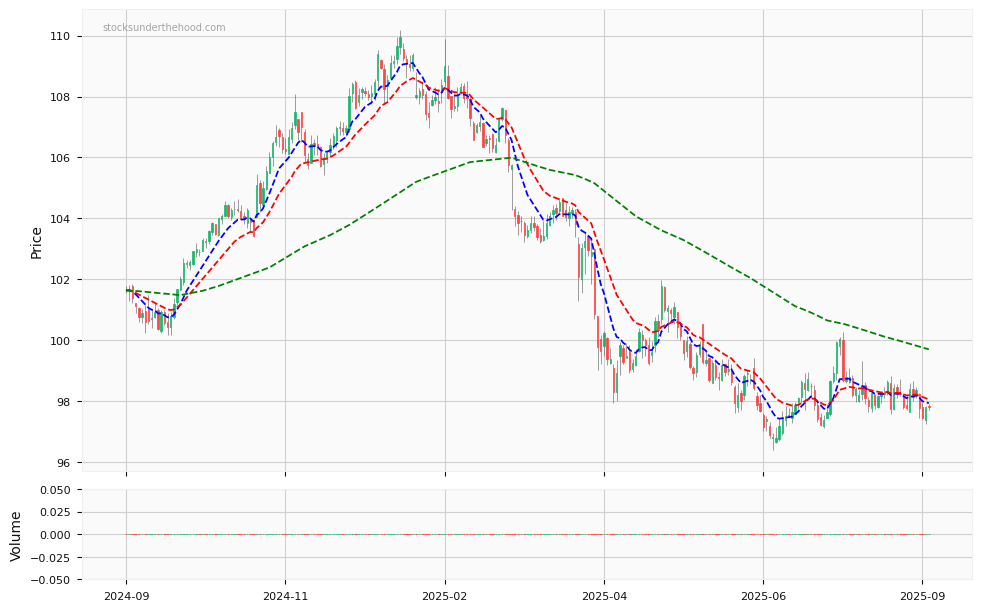
US 10 Year Bond Yield - 12 month daily chart with volume and three exponential moving averages to help quickly determine the trend.

The US 10-Year Treasury Yield represents the annualized return on investment for holding a 10-year U.S. government bond to maturity. It is a key indicator of investor sentiment, economic expectations, and interest rate trends. Often referred to as the “benchmark” yield, it influences a wide range of financial products, including mortgage rates, corporate borrowing costs, and other bond yields. Movements in the 10-year yield are driven by factors such as inflation expectations, Federal Reserve policies, economic growth data, and global market dynamics. A rising yield typically signals higher expectations for inflation and economic growth, while a falling yield may reflect increased demand for safe-haven assets or concerns about economic weakness.


US 10 Year Bond Yield

US Russell 2000 Index

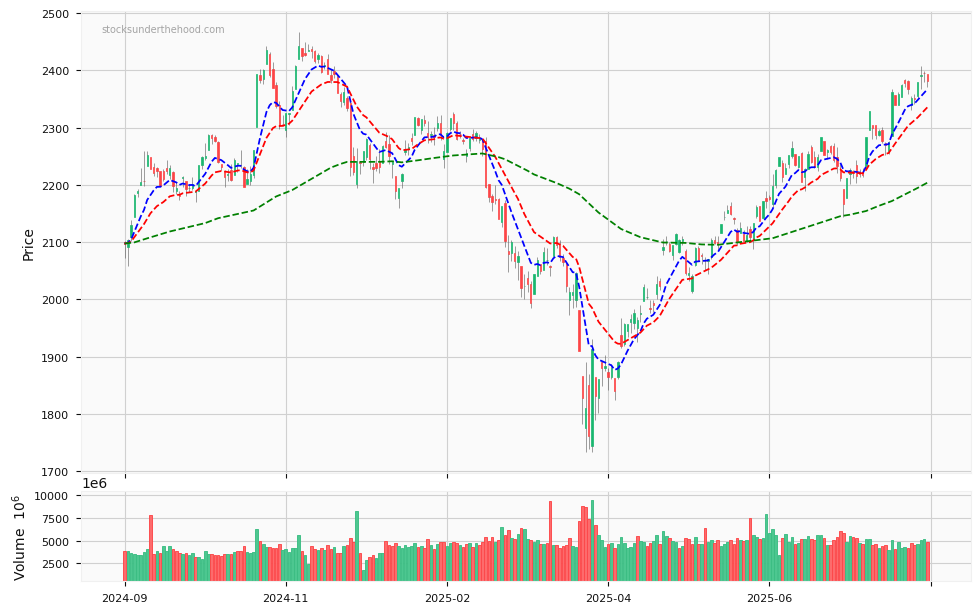
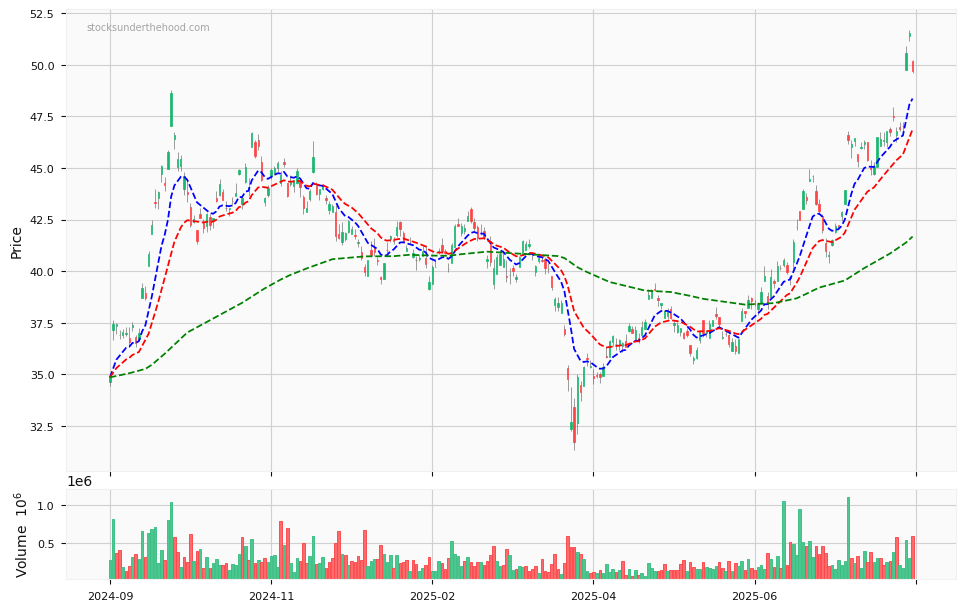
US Russell 2000 Index - 12 month daily chart with volume and three exponential moving averages to help quickly determine the trend.

The Russell 2000 Index is a widely followed stock market index that measures the performance of approximately 2,000 small-cap companies in the United States. It represents the smallest segment of the broader Russell 3000 Index, which includes the largest 3,000 publicly traded U.S. companies. As a key benchmark for small-cap stocks, the Russell 2000 is valued for its focus on smaller, growth-oriented companies that are often domestically focused and less internationally diversified than their larger counterparts. The index is market capitalization-weighted and is frequently used by investors to gauge the performance of the small-cap sector and broader trends in the U.S. economy.


US Russell 2000 Index

Copper

Copper Price in USD

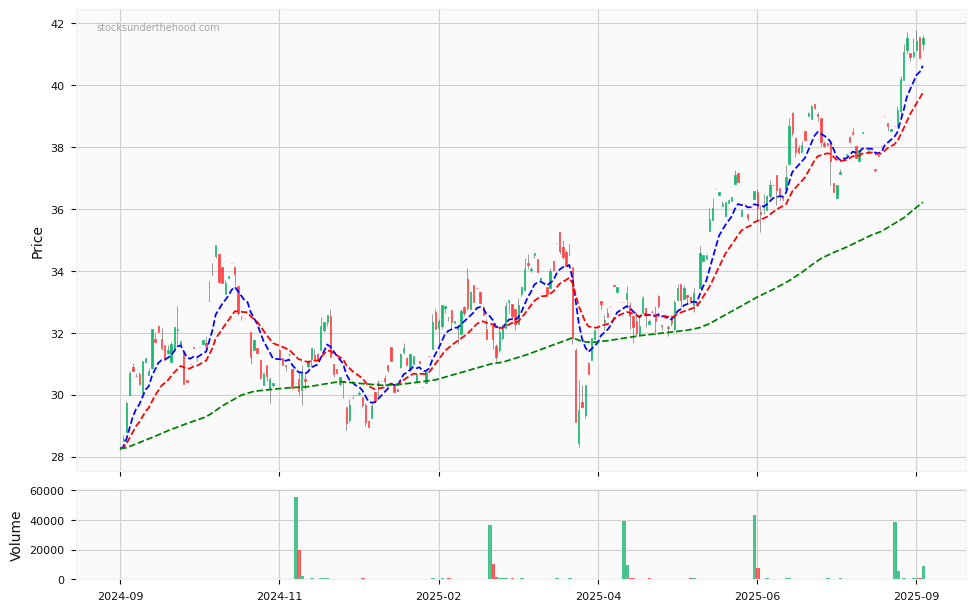
Candle share price chart for Copper in USD over the past 12 months, accompanied by trading volume bars and 3EMA moving averages.

Copper Miners ETF (WIRE)

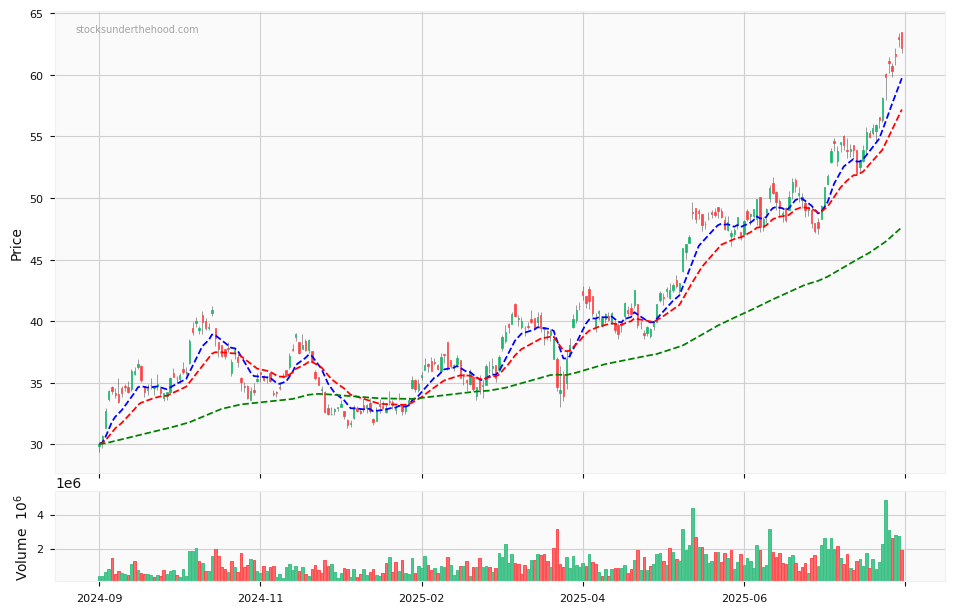
Candle share price chart for the Copper Miners ETF (WIRE) over the past 12 months, accompanied by trading volume bars and 3EMA moving averages.


Copper price, Copper Miners ETF price and some price charts of the most popular Copper stocks listed on the ASX.

Volatility Index (VIX)

Volatility Index (VIX) - 12 month daily chart with volume and three exponential moving averages to help quickly determine the trend.

The VIX, or Volatility Index, is a widely used measure of market expectations for volatility in the U.S. stock market over the next 30 days, derived from options prices on the S&P 500 Index. Often called the “fear gauge,” the VIX rises during periods of market uncertainty, stress, or sharp price swings, reflecting investor anxiety and demand for portfolio protection. Conversely, a low VIX indicates relative market calm and stability. While not directly a tradable asset, the VIX influences the pricing of derivatives and is used by investors as a tool to hedge risk or speculate on market volatility. It serves as a barometer of sentiment, often inversely correlated with stock market performance.


Volatility Index (VIX)

USD Bitcoin

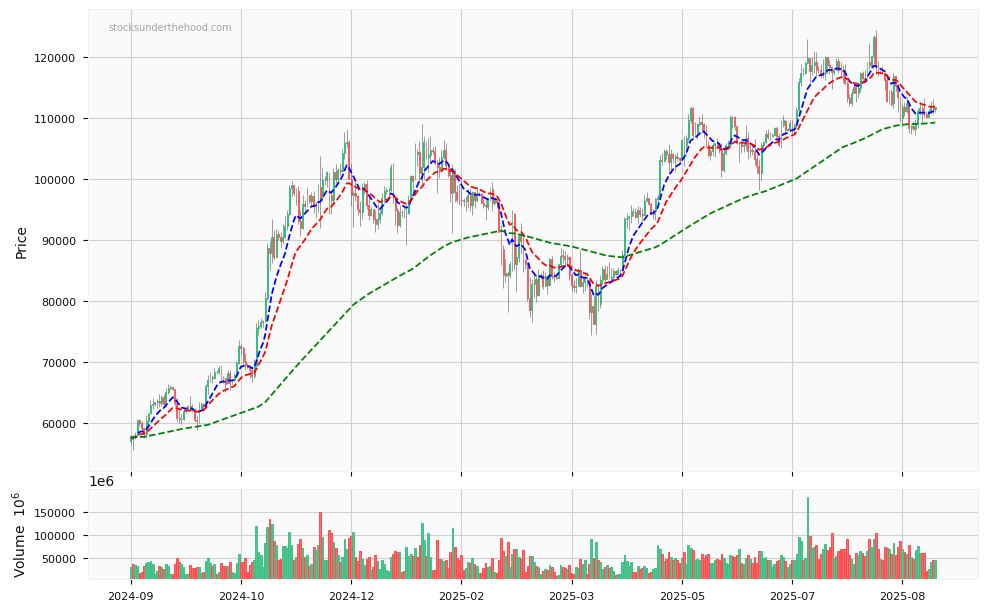
USD Bitcoin - 12 month daily chart with volume and three exponential moving averages to help quickly determine the trend.

Bitcoin is a decentralized digital currency that operates on a peer-to-peer network without a central authority, using blockchain technology to ensure secure and transparent transactions. Often referred to as the first cryptocurrency, it was created in 2009 by an anonymous entity known as Satoshi Nakamoto. Bitcoin’s price is influenced by factors like supply and demand dynamics, market speculation, macroeconomic conditions, adoption rates, and its perception as a store of value or “digital gold.” Its price can represent market sentiment toward cryptocurrencies as a whole, broader risk appetite, or skepticism of traditional financial systems. As a highly volatile asset, Bitcoin is both an investment vehicle and a barometer for the evolving landscape of digital currencies.


USD Bitcoin

ASX SPI 200 Index Futures

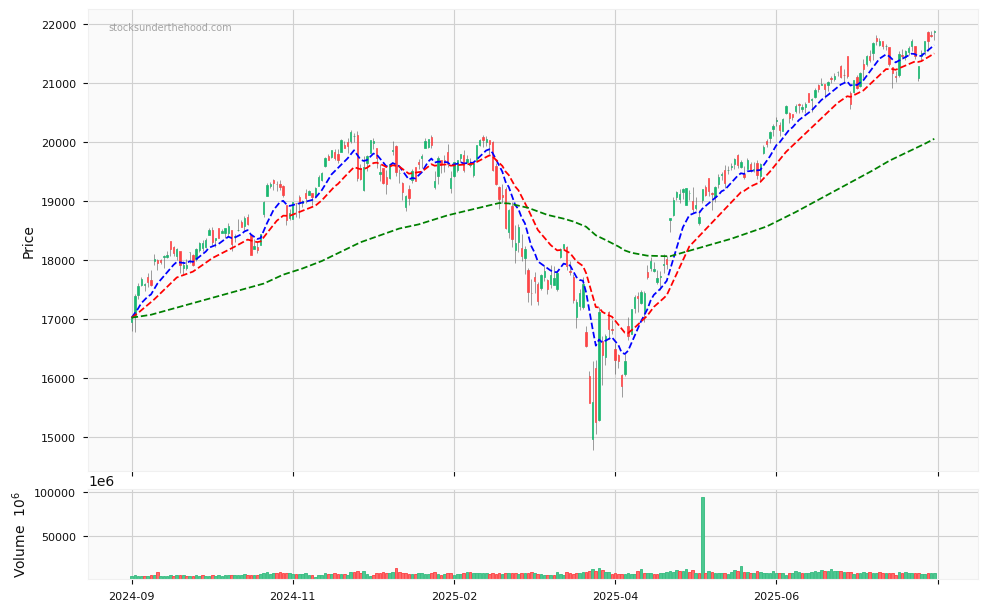
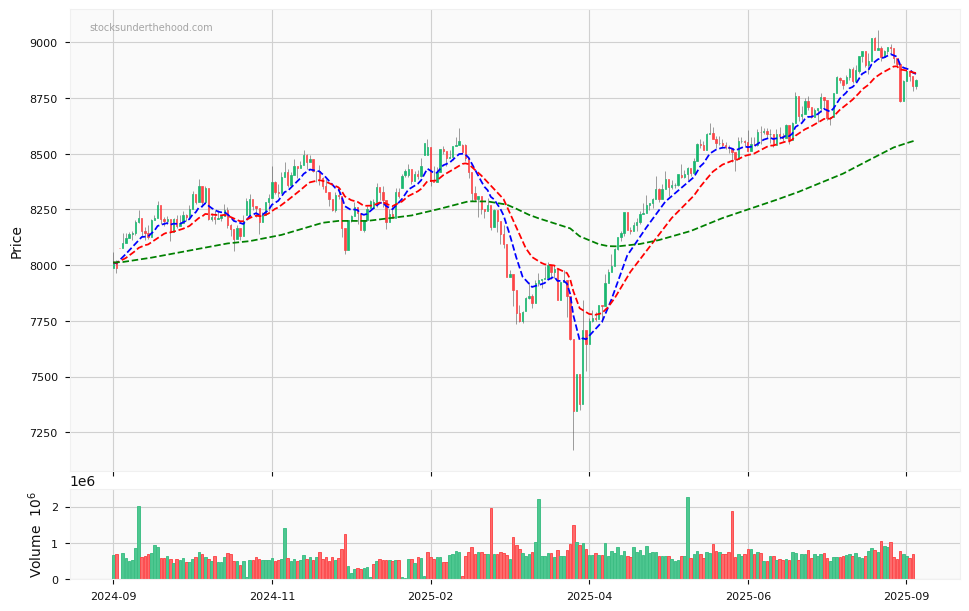
ASX 200 Index - 12 month daily chart with volume and three exponential moving averages to help quickly determine the trend.

The ASX SPI 200 Index Futures is a derivative contract that allows investors to speculate on or hedge against the future movements of the S&P/ASX 200 Index, which tracks the performance of 200 of the largest companies listed on the Australian Securities Exchange. Traded on the ASX 24 (formerly the Sydney Futures Exchange), these futures contracts provide exposure to the Australian equity market without directly buying shares. The SPI 200 is often used by institutional investors and traders to manage risk, gain leverage, or express views on the direction of the Australian stock market. Its price reflects market expectations for the index’s future value, influenced by economic data, corporate earnings, global market trends, and investor sentiment.


ASX SPI 200 Index Futures

US NASDAQ 100 Index

US NASDAQ 100 Index - 12 month daily chart with volume and three exponential moving averages to help quickly determine the trend.

The NASDAQ 100 is a prominent stock market index that tracks the performance of 100 of the largest non-financial companies listed on the NASDAQ stock exchange. It is heavily weighted toward technology and innovation-driven industries, including tech giants, biotechnology firms, and consumer services companies, though it also includes businesses from sectors like healthcare and retail. The index is market capitalization-weighted, giving larger companies more influence over its movements. Known for its focus on growth-oriented and tech-centric businesses, the NASDAQ 100 serves as a key indicator of the technology sector’s health and is closely watched by investors seeking exposure to innovative and dynamic companies.


US NASDAQ 100 Index

US S&P 500 Index

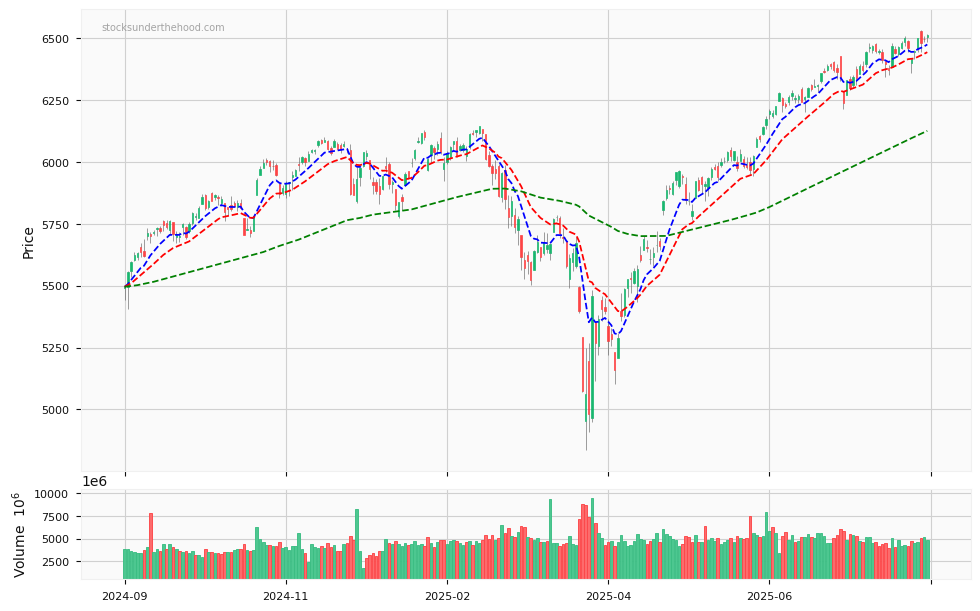
US S&P 500 Index - 12 month daily chart with volume and three exponential moving averages to help quickly determine the trend.

The S&P 500 Index is a widely recognized stock market index that tracks the performance of 500 large, publicly traded companies listed on stock exchanges in the United States. It serves as a key benchmark for the overall health and direction of the U.S. equity market and is considered a reflection of the broader economy. The index is market capitalization-weighted, meaning larger companies have a greater impact on its value. Representing diverse industries, including technology, healthcare, finance, and consumer goods, the S&P 500 is often used by investors to gauge market trends, compare investment performance, and build portfolios.


US S&P 500 Index

US Dollar Index

US Dollar Index - 12 month daily chart with volume and three exponential moving averages to help quickly determine the trend.

The U.S. Dollar Index (DXY) is a key financial benchmark that tracks the value of the U.S. dollar against a basket of six major world currencies. It serves as an indicator of the dollar’s strength in the global foreign exchange market and is closely watched by traders, economists, and policymakers.

Breakdown of the Basket

The six currencies in the index and their weightings are:

  • Euro (EUR) – 57.6%
  • Japanese Yen (JPY) – 13.6%
  • British Pound (GBP) – 11.9%
  • Canadian Dollar (CAD) – 9.1%
  • Swedish Krona (SEK) – 4.2%
  • Swiss Franc (CHF) – 3.6%

Since the euro has the highest weighting, movements in the DXY are often heavily influenced by the EUR/USD exchange rate.

How the DXY Moves

The index moves based on:

  • Interest Rate Differentials – Higher interest rates in the U.S. compared to other countries attract capital, strengthening the dollar and pushing DXY higher.
  • Economic Data – Strong GDP growth, low unemployment, and high inflation can lead to expectations of higher interest rates, boosting the dollar.
  • Geopolitical Events – Crises or uncertainty often lead to a stronger dollar as investors seek its safety.
  • Market Sentiment – If investors are risk-averse, they tend to buy dollars as a safe-haven asset.

Impact of the Dollar Index

  • Trade and Exports – A stronger dollar (higher DXY) makes U.S. goods more expensive for foreign buyers, potentially reducing exports. A weaker dollar (lower DXY) makes U.S. exports more competitive.
  • Commodities – Since most commodities (like oil and gold) are priced in dollars, a rising DXY makes them more expensive for foreign buyers, often pushing prices down.
  • Global Markets – Emerging markets with dollar-denominated debt can struggle when DXY rises because it becomes more expensive to repay debt.

Long-Term Trends

The DXY was created in 1973 and has seen significant fluctuations:

  • 1985 Peak (~160) – The dollar was extremely strong, leading to the Plaza Accord, where major economies agreed to weaken it.
  • 2008-2011 Decline (~72) – Post-financial crisis, low U.S. interest rates weakened the dollar.
  • Recent Highs (2022-2023 above 110) – The Federal Reserve’s aggressive rate hikes strengthened the dollar.

Key Takeaway

The DXY is a crucial tool for understanding global market trends, monetary policy, and international trade. A rising DXY signals dollar strength, while a falling DXY indicates weakness, influencing everything from corporate profits to inflation and investment flows worldwide.

Lithium

Global X Lithium & Battery Tech ETF as a proxy for Lithium Price Performance
Global X Lithium & Battery Tech ETF - 12 month daily chart with volume and three exponential moving averages to help quickly determine the trend.

A Key Material in Energy Storage and Technology

Lithium (chemical symbol: Li) is a soft, silvery-white alkali metal known for its lightweight and highly reactive properties. It is most commonly found in brine deposits, pegmatite minerals (such as spodumene and lepidolite), and clay formations. The largest reserves are concentrated in the “Lithium Triangle” of South America, spanning Argentina, Bolivia, and Chile, where vast salt flats hold mineral-rich brine. Australia is also a major producer, particularly through hard rock mining of spodumene. Leading companies in the sector include Albemarle Corporation (USA), SQM (Chile), Tianqi Lithium (China), and Ganfeng Lithium (China), alongside significant Australian mining firms such as Pilbara Minerals and Mineral Resources.

The primary use of this critical material is in rechargeable batteries, which power everything from smartphones and laptops to electric vehicles (EVs) and renewable energy storage systems. Demand has surged in recent years due to the global transition to clean energy and the electrification of transport. Beyond energy storage, it is also used in glass and ceramics, lubricating greases, pharmaceuticals (such as mood stabilizers), and even nuclear fusion applications. As a key component in modern technology and sustainable energy solutions, its role in the global economy continues to grow.


About The Global X Lithium & Battery Tech ETF (LIT)

The Global X Lithium & Battery Tech ETF (LIT) is an exchange-traded fund that provides investors with exposure to the entire battery supply chain, from raw material extraction to cell production and technology development. Managed by Global X ETFs, LIT tracks the Solactive Global Lithium Index, which includes companies involved in mining, refining, battery production, and electric vehicle (EV) technology.

This ETF offers a diversified approach to investing in the sector, including major producers such as Albemarle Corporation (USA), SQM (Chile), and Ganfeng Lithium (China), as well as companies advancing next-generation battery technologies, like Tesla (USA), Panasonic (Japan), and BYD (China). By encompassing both raw material suppliers and manufacturers, LIT captures the full spectrum of growth opportunities in the global push toward electrification and sustainable energy storage.

Investing in LIT provides exposure to one of the most rapidly expanding industries, as demand for advanced energy storage solutions is expected to soar with the rising adoption of electric vehicles, grid-scale batteries, and consumer electronics. However, the ETF is also subject to volatility, influenced by fluctuations in raw material prices, regulatory shifts, and technological advancements. Despite these risks, LIT remains a popular option for investors seeking a long-term play on the battery revolution and the transition to clean energy.

Silver

Silver Price In US Dollars

Candle share price chart for Silver over the past 12 months, accompanied by trading volume bars and 3EMA moving averages.

Silver Miners ETF

Candle share price the Silver Miners ETF (SIL) over the past 12 months, accompanied by trading volume bars and 3EMA moving averages.


Silver price in USD, Silver Miners ETF price and a watchlist of the most popular Silver stocks listed on the ASX.